
US Nuclear and Grapheton’s New Supercapacitors Could Charge Electric Vehicles
US Nuclear and Grapheton’s New Supercapacitors Could Charge Your Next Electric Vehicle In Seconds
Los Angeles, CA. May 24, 2021 – US Nuclear’s (OTCQB: UCLE) partner Grapheton has developed the next generation of supercapacitors using a special patented glassy carbon material. Featuring remarkable charge storage capacity and power density, Grapheton’s supercapacitors could be used in powering and rapidly charging electric vehicle systems. A typical electric vehicle running on lithium-ion batteries takes about 8 hours to fully charge, but a supercapacitor system could be fully charged in under a minute. Batteries still retain the advantage when it comes to higher energy density (ability to store energy), but new advances in supercapacitor technology, such as those made by Grapheton, could allow supercapacitors to hold the same amount of charge like a battery and deliver the charge in just seconds. Grapheton’s unique glassy carbon supercapacitors can have up to 3 million times more capacitance than commercial off-the-shelf capacitors.
Supercapacitors have numerous advantages over traditional batteries, such as:
- Supercapacitors can be recharged with little to no degradation (supercapacitors can handle over 1 million charge/discharge cycles vs 2000-3000 cycles with regular batteries), which means huge savings in materials and costs
- Almost instant charge and discharge times
- Weigh less than traditional batteries
- Supercapacitors are eco-friendly and don’t contain toxic metals or harmful materials and so avoid the risks of poisoning workers, car owners, or the environment.
There are already some electric vehicles in trial operation that run off supercapacitors, such as the capabus, which is a new type of electric bus that runs on supercapacitors (or in some versions, a hybrid of batteries and supercapacitors). The capabus runs without continuous lines overhead and instead rapidly charges the supercapacitors at each bus stop along the route- a collector raises from the top of the bus and touches an overhead charging line, which only takes about 30-80 seconds to fully charge. It is estimated that this type of bus has 1/10th the energy cost of a diesel bus which can lead to a lifetime fuel savings of $200,000. The capabuses use 40% less electricity than even an electric trolley bus and cost about 40% less than a lithium-ion bus. Buses are the logical choice for supercapacitor systems for now as they have predictable routes and stop frequently. Advances in supercapacitor energy density could, over time, replace batteries altogether and be used in all forms of portable electronics.
Safe Harbor Act
This press release includes “forward-looking statements” within the meaning of the safe harbor provisions of the United States Private Securities Litigation Reform Act of 1995. Actual results may differ from expectations, estimates, and projections and, consequently, you should not rely on these forward-looking statements as predictions of future events. Words such as “expect,” “estimate,” “project,” “budget,” “forecast,” “anticipate,” “intend,” “plan,” “may,” “will,” “could,” “should,” “believes,” “predicts,” “potential,” “continue,” and similar expressions are intended to identify such forward-looking statements. These forward-looking statements involve significant risks and uncertainties that could cause the actual results to differ materially from the expected results.
Investors may find additional information regarding US Nuclear Corp. at the SEC website at http://www.sec.gov, or the company’s website at http://www.usnuclearcorp.com
CONTACT:
US Nuclear Corp. (UCLE)
Robert I. Goldstein, President, CEO, and Chairman
Rachel Boulds, Chief Financial Officer
(818) 883 7043
Email: info@usnuclearcorp.com
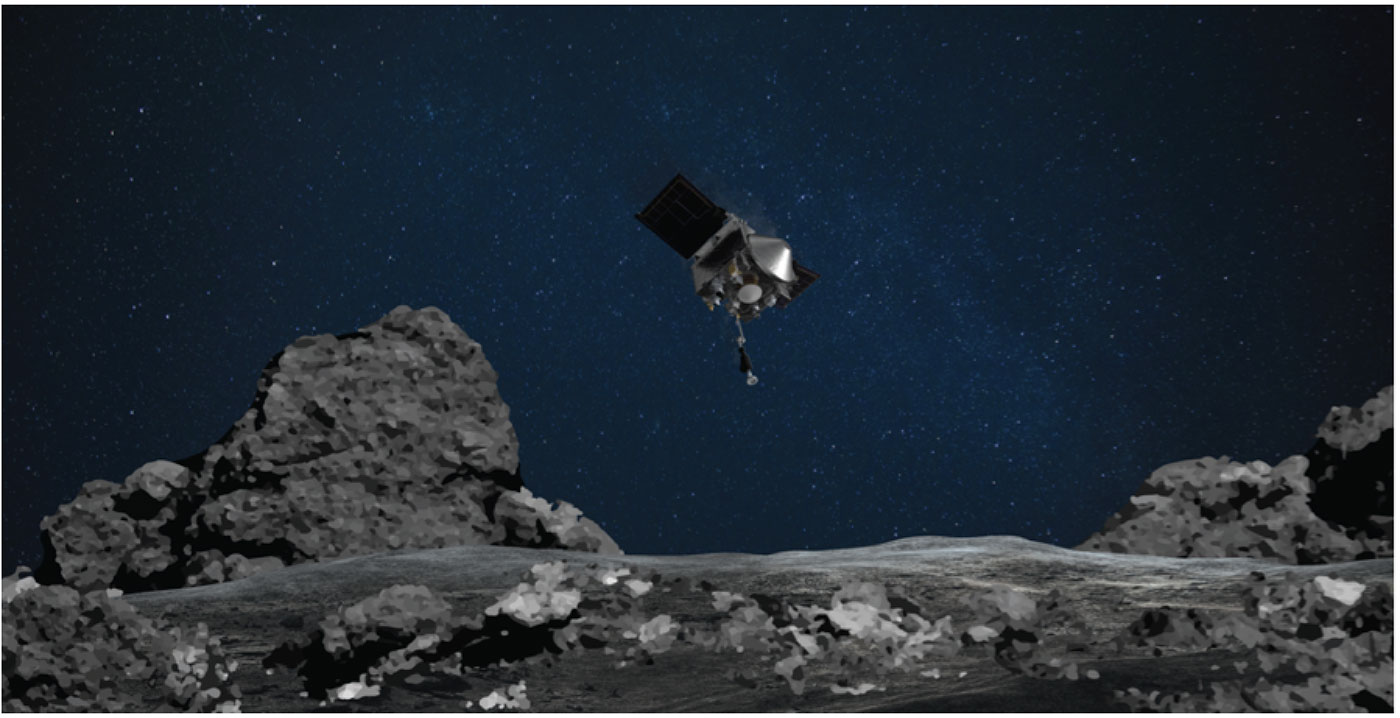 Los Angeles, CA. April 28, 2021 – On April 15, 2021, US Nuclear Corp. (OTCQB: UCLE) signed a historic trade agreement with Solar System Resources Corporation that marked the beginning of the age of space trade and mining. The new agreement sets preliminary prices for the high-value materials to be extracted. It also establishes and expands our cislunar and solar system value chain and adds SatRevolution as a new partner. The agreement is a continuation of the Letter of Intent signed on February 5, 2021, and outlines how US Nuclear and Solar Systems Resources Corp. plan to cooperate building a value chain starting with mining and selling valuable helium-3 and lanthanide metals and other materials from space deposits.
 On March 11, 2011, a rare and powerful 9.0 magnitude earthquake was detected by the Fukushima Daiichi Nuclear Power Plant, which automatically shut down the reactor and started emergency diesel generators to power the pumps which would continue to cool down the fission reactor. Unfortunately, a 14 meter (46 ft) high tsunami arrived shortly afterward which swept easily over the seawall and flooded the plant and the emergency generators, causing the pumps and cooling to fail, leading to three nuclear meltdowns, three hydrogen explosions, and the release of radioactive contamination. In the decade since the disaster, cooling water has been leaking from the primary containment vessels into the basements of the reactor buildings, with new water being pumped into the reactors to cool the melted fuel. The cooling water is treated using an advanced filtration system to remove most all of the contaminants, but unfortunately, it cannot remove the tritium contamination, which is why the water has been stored in tanks.
 On February 18, 2021, NASA’s advanced Perseverance rover touched down on Mars and is now seeking evidence of native life on the red planet. Sooner than you think, human engineers and adventurers may be building the first town on Mars. While we have made great strides in robotics technology, the next step in the journey is sending humans to Mars. In order to send a crewed mission to Mars, NASA is focusing on nuclear electric or nuclear thermal propulsion systems for minimizing the time and fuel it takes to travel to Mars and back.